Briefing Paper: IS-Khorasan Towards Financial Autonomy | Antonio Giustozzi
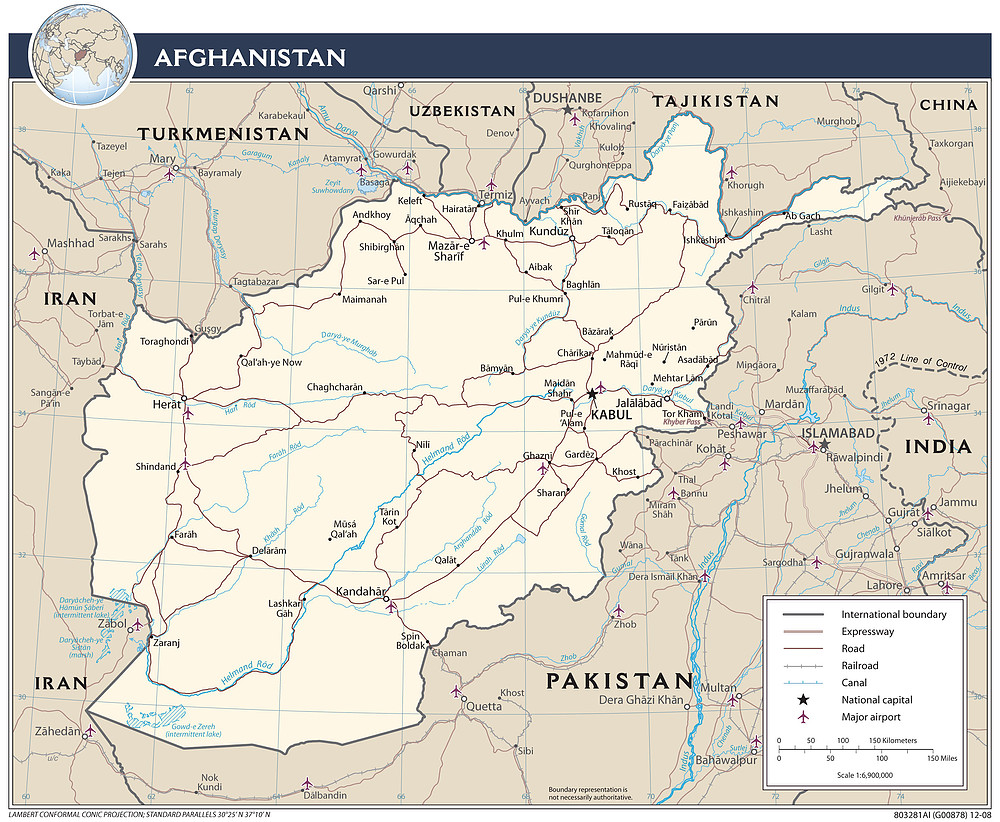
As external funding declines, IS-K looks for more money in Afghanistan
Introduction
When IS-K was established in early 2015, it was almost entirely dependent on funds sent from IS-Central and from donations agreed by IS-Central, but sent directly by the donors (largely in the Arab Gulf) to IS-K. Although IS-K gradually introduced a number of taxes and started looking for its own local donors in Afghanistan and Pakistan, throughout 2015 and 2016 it remained largely dependent on external funding. Donations from the Arab Gulf went up, while IS-Central reduced its contributions. Funds raised locally remained relatively marginal.
Unsurprisingly in 2017 things started getting more complicated for IS in general, and inevitably for IS-K too. As IS in Iraq and Syria went from defeat to defeat, the flow of money from the centre of the Caliphate to IS-K initially dried up. Donors too started losing their enthusiasm for IS and even IS-K saw donations decline. It became clear that in the future IS-K would have needed to rely more and more on local fund raising. The decline in the funding coming from external donors and from IS-Central was compounded by a crackdown on the financial support structures set up by IS-K in the UAE (mostly Dubai). When these facilities were shut down in early 2017, IS-K started struggling to transfer even the cash it was still receiving from Arab Gulf donors to Khorasan, making increased local fund raising an immediate need.[1]
This paper looks into IS-K’s efforts to raise funds in a variety of ways in Afghanistan, its main area of operations and the only country in ‘Khorasan’ where IS-K exercises significant territorial control.
Towards financial autonomy
After the February 2017 debacle, that led to the closure of the structures of the IS-K financial commission in the UAE, IS-K ended up relocating the headquarters of the financial commission first to Qatar, then to Pakistan (mainly Peshawar) and finally to Achin district (Nangarhar province). Its structures were downsized compared to what had been concentrated in Dubai, and as of mid-2018 the commission had only 62 men based in Achin.[2] Even more importantly than the downsizing, however, was the eventual relocation to Afghanistan, which was probably not unrelated to the on-going shift in the sources of funding, from external to local.
IS-K had some type of local revenue collection already in its early days, but it amounted to little.[3] When IS-K first appeared in Afghanistan in early 2015, it was slow in introducing taxation. It exempted common people from taxes altogether and it focused on taxing wealthy individuals and businesses.[4] Even in this case taxes were usually introduced only several months after IS-K had seized control of an area.[5]
It was the Caliphate’s leadership itself that started encouraging IS-K to raise more money locally, even making direct suggestions about how that could be achieved. Aside from the obvious encouragement to expand the areas under control of IS-K, IS-Central also suggested focusing on the mining sector and seizing agricultural lands.[6]
By 2017 IS-K had introduced taxes on farmers too. As of mid-2018 the ‘official’ tax rates of IS-K were 3% of income for farmers and 7% for all business activities, applying to all those living in areas under IS-K control, ‘because we are providing them with security and other facilities.’[7] They also started collecting taxes on electricity and water.[8] Nonetheless in 2017/18 IS-K raised a modest $15 million in taxes and ‘voluntary contributions’.[9]
IS-K found more significant local sources of revenue in mining and drugs, even if its involvement with the drug trade was unsteady. IS-K claims today to have achieved substantial financial autonomy from IS-Central, and to be already able to sustain the bulk of its operations without any external financial support. Its efforts to wean itself off financial dependency from abroad were helped by the reconciliation of IS-K’s two internal factions in March 2018. Moawiya Uzbekistani, the rebel deputy governor, agreed to accept Aslam Faruqi (whose real name is Qazi Mohammad) as governor of Khorasan, after a standoff which lasted 10 months. The two factions, which had been operating separately, have reunified even organisationally. This also applies to their financial structures. [10]
Mining: the emergence of the ‘Islamic State entrepreneur’
IS-K started targeting mining as a source of revenue early on, but initially with limited impact.[11] As a mining operator stressed, at that time IS-K was not trying to take control of mining operations and contented itself with charging a rather low 3% tax.[12] In 2016/17 IS-K made just $8 million from mining, according to an internal source.[13]
Things changed during 2017. By 2018 IS-K’s fund raising was mostly centered on mining activities. This was achieved by raising the tax rates, and by taking over entire mining operations.
According to a source, in 2017 IS-K was raising 500 Pak Rupees in tax from every tonne of talc mined in areas under its control in Nangarhar, corresponding to 4.9 million Pak Rupees ($49,000 per year) from a single operator.[14] By 2018 another mining operator in Nangarhar was describing the rates as having been increased to 4% on marble and 7% on talc for businesses, and 3% for individuals. At the main mines, IS-K posts a representative, tasked with making sure that mining operator does not cheat pays all his taxes.[15]
IS-K enforces its taxes very strictly, and has no tolerance for evasion or bribing, contrary to what is the case for the Taliban; its checkpoints make sure that any output being taken away from IS-K’s territory has paid its due.[16] It also imposes heavy fines on mining operators who pay taxes to Taliban as well. Reportedly 10 mining operators have been assassinated by IS-K for having broken its rules in Nangarhar alone.[17] The only positive aspect of IS-K control is that it will protect its ‘tax payers’ from attempts by third parties to extract more money. As a result, mining operators tend to have little sympathy for IS-K and prefer the Taliban.[18]
Among the mines which are under complete control of IS-K, according to a source within the organisation itself, are the marble mine of Nawar Tanghi area of Hesarak district, several mines in the Kado Khil and Tarkaki areas of Sherzad district, marble, talc and other mines in Achin, the Samzayee Ziarat marble mine in Kunar, the gem stones mines of Ishkamish, Khosh and Geram districts of Badakhshan province, etc. Ion the future IS-K plans to seize control over more and more of these assets. [19]
When IS-K takes full control of a mine, the hire their own workforce and bring engineers from abroad, namely Pakistan, Saudi Arabia, etc. In some cases IS-K forms joint ventures with mining operators, or grants ‘exploitation licenses’ to mining operators of its liking. The mined goods are sold in Pakistan, where risk of detection is low.[20]
In order to secure a smoother extraction of revenue from mining operations, IS-K signed sharing agreements with the Shura of the North of the Taliban and with the Haqqani network. The former was signed in May 2016 and concerned the extraction of valuable minerals in Badakhshan, while the latter was signed in February 2018 and concerned mining activities all over Afghanistan. [21]
Already in 2017/18, according to a source in the financial commission of IS-K, the organisation raised $88 million from mining, that is well above the $55 million obtained from external donors. A source in the Finance Commission estimated that in 2018/19 mining revenue would grow dramatically, perhaps even doubling on 2017/18. Mostly this revenue comes from talc, marble, gemstones and semi-precious stones mines in the provinces of Badakhshan, Takhar, Nangarhar, Kunar, Nuristan.[22]
So far IS-K’s efforts to seize control over mining activities in Afghanistan have been concentrated mainly in Nangarhar province, where the conflict between IS-K on one side and Taliban and local strongmen has been driven by the former’s desire to acquire control to as many mining activities as possible (chromite, marble, talc, gemstones, etc.). [23] The same can be said of Helmand province, where Taliban and IS-K have been competing for the control of the mines of Khaneshin district.[24]
A troublesome relationship with the drugs trade
For almost a year IS-K collected taxes on the drugs trade, without any hint of being hostile to the drug trade. Then in November 2015 a ban on the drug trade was imposed in all areas under IS-K’s control; IS-K even made of the ban a key point of its propaganda.[25] In its first 28 months of existence, it claimed to have detained almost 300 individuals involved in the narcotics trade.[26]
Given its growing financial needs, the ban imposed by IS-K on the drug trade is puzzling. Indeed the ban was lifted temporarily in south-western Afghanistan in January 2017, but even more puzzlingly was reinstated in May 2018. A source in the IS-K finance commission explained that the ban on drugs was lifted temporarily in the south-west because it was affecting IS-K recruitment too badly:
the regional people were all involved in this trade and they have warned us, that if we did not lift the ban, they would not support or assist us, therefore we have allowed them for a short time […]. …our people and ranks were in need of urgent assistance and money as we were not able to get financial help and support from Syria and Iraq. Therefore, we have considered to allow the drugs trade for some time in order to raise enough money in taxes for answering our basic necessities.[27]
But if these explanations are correct, then why was it reinstated in May 2018, when IS-K’s financial landscape was arguably worse than at the time it was lifted? The ban is reportedly strictly enforced, and IS-K expels members caught breaking it.[28] The current (mid-2018) punishment for those involved in the narcotics business are:
The land of farmers who grow or harvest opium will be seized and given to other people;
All heroin Labs must be destroyed and eliminated
Smugglers must retire from the narcotics business, if not; they will be hanged to death. [29]
